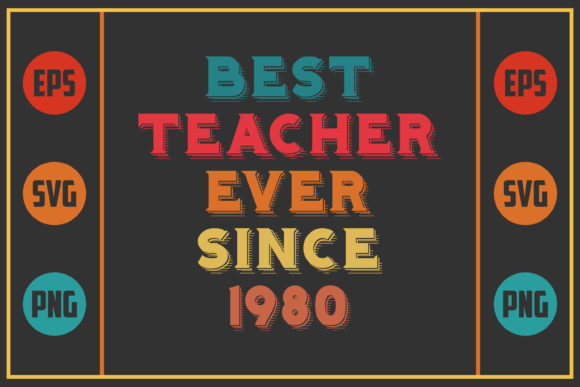
Reviewing the Best Teacher Ever Since 1991 Design
As a designer who has spent years navigating the intersection of digital assets and tangible textiles, I approach every new machine embroidery design with a critical eye. It is not enough for a graphic to look good on a screen; it must translate seamlessly into thread, respecting the limitations of fabric and the mechanics of the needle. Recently, I evaluated the Best Teacher Ever Since 1991 file to determine its viability for real-world projects. This review is aimed at fellow embroidery designers, small business owners, and crafters who need to know if this asset will hold up in a commercial or personal setting.
First Impressions and Visual Personality
The first thing that strikes you about the Best Teacher Ever Since 1991 layout is its nostalgic yet professional tone. The typography suggests a classic, established authority, which fits perfectly with the theme of long-standing educational service. From a visual standpoint, the design relies heavily on clean lines and balanced spacing. For those of us working in Crafts and Graphics, we know that text-heavy designs can be tricky. If the kerning is too tight, the threads merge into an illegible blob. If it is too loose, the design lacks cohesion.
In this case, the structure appears robust. The mood is celebratory but understated, making it versatile. It does not scream for attention with excessive decorative elements, which allows it to sit comfortably on various garments without looking cluttered. This simplicity is often where the true value of a digital embroidery file lies. It offers a blank canvas for your choice of thread colors and fabric textures, rather than dictating a rigid aesthetic.
Real-World Application: The Custom Tote Scenario
To truly test the potential of this design, I imagined a specific client request: a custom embroidered tote bag for a retiring educator. This is a common scenario for any Etsy seller or small shop product creator. The client wants something durable, meaningful, and stylish enough for daily use. Here, the Best Teacher Ever Since 1991 design shines. Because the text is the primary focus, it reads clearly from a distance, which is essential for a tote bag that might be carried across a classroom or a grocery store aisle.
When visualizing this as a tote bag design, I considered the stitch types. A design like this typically benefits from a combination of satin stitch for smaller accents or borders and a clean fill stitch or dense running stitch for the lettering, depending on the size. The clarity of the font ensures that even if the fabric has a slight weave texture, the message remains legible. This kind of reliability builds customer trust. When a buyer receives a handmade product that looks professional and crisp, they are more likely to return for future personalized gifts.
Versatility Across Apparel and Home Decor
Beyond tote bags, this asset is highly adaptable for custom apparel. Imagine it stitched onto the chest of a high-quality cotton sweatshirt. The sweatshirt embroidery market is vast, particularly during the holiday season. This design serves as an excellent holiday gift option for teachers who have been in the profession for decades. The specific year "1991" adds a layer of personalization that generic "Teacher" designs lack. It acknowledges tenure and dedication, which adds emotional value to the finished product.
For those interested in home decor, this design could work well on a pillow cover or a kitchen towel. However, caution is needed. On a tea towel, the fabric is thin and prone to puckering. You would need to pay close attention to your stabilizer choice. A cut-away stabilizer might be overkill for a lightweight towel, but a tear-away might not provide enough support for dense lettering. Testing on scrap fabric is non-negotiable here. The goal is to ensure the thread colors pop against the background without distorting the fabric grain.
Technical Considerations and Stitch Density
One of the most critical aspects of evaluating any embroidery file is understanding its density. While the product description notes that you receive an SVG file suitable for Cricut, Silhouette, and Adobe Suite, it is crucial to note that this is a vector graphic intended for cutting or digital design, not necessarily a pre-digitized stitch file for embroidery machines unless specified otherwise by the creator. If you are converting this SVG into an embroidery format, you have full control over the stitch density. This is a double-edged sword. It offers flexibility but requires skill.
If you are digitizing this yourself, ensure that the lettering is not too thin. Thin lines can break easily during washing. Conversely, if the design is already digitized, check the underlay stitches. Proper underlay prevents the top threads from sinking into plush fabrics like fleece or terry cloth. For caps and hats, the curved surface presents a challenge. The design must be centered perfectly, and the height should be limited to avoid hitting the seam of the cap. The Best Teacher Ever Since 1991 layout, being primarily horizontal, is generally safer for caps than tall, vertical designs, provided the width fits within your hoop constraints.
Navigating Fabric and Hoop Limitations
Every designer knows that fabric choice dictates success. On dark fabrics, you may need to use a lighter thread color or add a white underlay to ensure the text stands out. On stretchy fabrics, such as performance tees, the design must be stabilized properly to prevent distortion. If you are creating an embroidered patch, you have more freedom. Patches allow you to use heavier threads and denser stitches because the backing is rigid. This makes the design ideal for boutique branding or staff uniforms.
Always confirm your hoop size before starting. If the design is large, you may need a 5x7 or 6x10 hoop. Attempting to squeeze a large design into a 4x4 hoop will result in cropped edges and frustration. Additionally, inspect the small details. The number "1991" must be distinct. If the digits are too close together, they may merge. Use your software to simulate the stitching process. Check the design in black and white mockups to verify contrast and readability without the distraction of color.
Commercial Viability and Licensing
For commercial embroidery professionals and craft business owners, licensing is paramount. The product description states this is a digital download containing an SVG file. Before selling items made with this design, you must verify the license terms. Some creators allow unlimited commercial use for physical products, while others restrict digital resale. Since this is a vector file, it is often used for print-on-demand or cutting machines as well. Ensure you understand the scope of usage. Using a design incorrectly can lead to copyright issues that harm your brand consistency and professionalism.
When used correctly, this design enhances buyer engagement. It tells a story. It is not just a label; it is a badge of honor. For apparel decorators and creative entrepreneurs, offering such specific, tenure-based designs can set your shop apart from competitors who only offer generic titles. It shows attention to detail and an understanding of your customer's pride in their career.
Final Verdict for Makers and Designers
The Best Teacher Ever Since 1991 design is a strong candidate for a variety of projects, from baby embroidery on keepsake blankets to professional design assets for teacher appreciation weeks. Its strength lies in its clarity and emotional resonance. However, its success depends entirely on your execution. Pay attention to your stabilizer, test your thread tension, and respect the fabric you are working with. Whether you are creating a printable mockup for your online store or stitching a final piece for a client, this design offers a solid foundation for a high-quality, memorable product. Always prioritize quality control, and let the craftsmanship speak for itself.